Thursday, April 11, 2013


WHAT ARE THE HEALTH BENEFITS OF COOKING WITH COCONUT OIL?

Add to my favorites
8
Oct 8, 2010 | By Tom Stewart
What Are the Health Benefits of Cooking With Coconut Oil?
Photo Credit coconut image by Witold Krasowski from Fotolia.com
It was once suggested that coconut oil is an unhealthy option for cooking. But as the Thai Food and Travel website explains, these studies, conducted decades ago, only considered hydrogenated coconut oil. The truth is that coconut oil has been used in cooking for many generations around the world. And scientists are discovering that cooking with coconut oil can have many different health benefits.

WEIGHT LOSS

Cooking with coconut oil can be helpful if you are trying to lose weight. According to www.organicfacts.net, coconut oil naturally increases your metabolism. It removes unnecessary stress on the pancreas, which helps to burn more energy and reduce weight. Coconut oil also has short- and medium-chain fatty acids, which can help you keep weight off. Easy to digest, you will also find that coconut oil helps keep your thyroid healthy, too.

DIGESTION

Cooking with coconut oil can benefit your digestive system because it contains saturated fats with anti-microbial properties, which help eliminate parasites, bacteria and other causes of indigestion. Because it is easy to digest, it can help prevent stomach-related problems like irritable bowel syndrome. Coconut oil is also healthy because it helps your body absorb nutrients, vitamins, minerals and amino acids.

IMMUNITY SYSTEM

According to www.organicfacts.net, cooking with coconut oil is a great way to improve your immune system. The oil contains beneficial properties like anti-microbial lipids, lauric acid and capric acid. It also contains caprylic acid which has antiviral and anti-fungal benefits. Your body can use these properties, like lauric acids, and turn them into monolaurin, a substance known to help prevent viruses and bacteria that can lead to illnesses like influenza, herpes, HIV and cancer. People with diabetes will find that coconut oil can help control their blood sugar and improve the secretion of insulin. Coconut oil has also been shown to help dissolve kidney stones.

HEART DISEASE

Cooking with coconut oil is also now considered to be good for your heart. The oil contains 50 percent lauric acid, which is known to help control conditions like high cholesterol and high blood pressure. The saturated fat in coconut oil, unlike other vegetable oils, is not harmful and won't increase your LDL levels.

REFERENCES

Article reviewed by Jason Dean Last updated on: Oct 8, 2010


Read more: http://www.livestrong.com/article/273813-what-are-the-health-benefits-of-cooking-with-coconut-oil/#ixzz2QCiMHAWj

Olive Oil is NOT Health Food but Sick Food

http://youtu.be/GfBKauKVi4M

Olive Oil Is Not Healthy - Michael Klaper MD

http://youtu.be/OGGQxJLuVjg

Fortune Rice Bran Oil – Product Review

Oil is an important part of food. Every cuisine calls for the use of some or the other kind of oil because “fat” is essential to keep our body working. With the increase in the number of lifestyle related diseases, it has become so important for us to review our food and lifestyle habits regularly and see what little changes we can make for us to have a better life. In a time where it is important for us to make such conscious decisions about the products we consume, Fortune has recently launched its new product “Fortune Refined 100% Rice Bran Oil” that comes with a hoard of good features!
   
Rice bran oil is the oil extracted from the germ and inner husk of rice. It has a high smoke point of 213°C (415°F) and has a mild flavor, making it suitable for high-temperature cooking methods like stir frying and deep frying. In fact, switching over from groundnut oil to Rice bran oil was as easily as switching perfumes!
Here are some of the amazing health benefits of this oil:-
  • Decreases Cholesterol: Rice bran oil reduces blood triglycerides, which are the fat molecules in the blood. Low levels of triglycerides result in low levels of cholesterol.
  • Provides balanced nutrition: The body requires two kinds of fatty acids- one that provides energy and the other that is required for biological processes. Rice bran oil contains a balanced proportion of both, that helps the body receive balanced nutrition.
  • Helps to have better skin: Squalene is an organic compound naturally produced by human skin cells and is natural moisturizer. Rice bran oil contains good amounts of it which prevent aging of the skin.
  • Enhances the immune system: Antioxidants improve health by fighting free radicals that harm the immune system. Rice bran oil has natural antioxidants that help build stronger immunity.
  • Less-oily healthy food: Cooking oils become sticky due to oxidation during frying. But rice bran oil is highly stable which keeps it non-sticky and the food absorbs less oil.
Jalapeno Fritters: Click here for the recipe
What I loved about the product?
  • This oil comes in 1 liter, 2 liter, 5 liter & 15 liter jar. I have a 2 liter jar with a big handle which is very convenient to carry.
  • The oil does not change the taste of food. It is odorless.
  •  It can be used in cooking any type of food whether it is vegetarian or non-vegetarian.  It can also be used in baking.
  • The cost:- 1 liter of this oil costs Rupees. 115/- and 2 liter costs Rupees. 230/-. It is marginally costlier than sunflower oil. But if you’re concerned about your health, you should be willing to spend a few extra bucks on a good product.
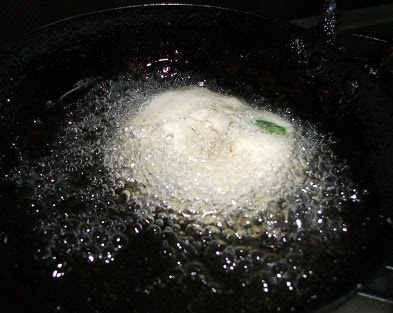
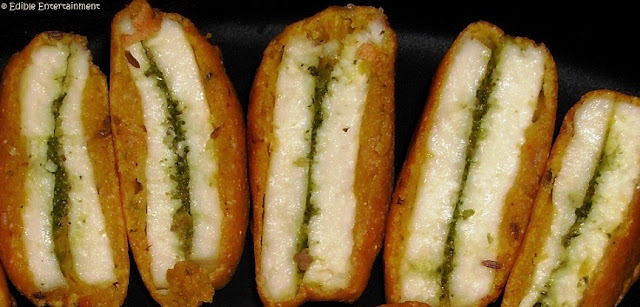
Paneer Pakoda with a twist ~ Click here for the recipe
But enough of benefits! After all, it is oil and the true test lies in its taste, eh? Just to test if it is in fact versatile, I’ve tried a variety of dishes over the past week. Be it Indian curries or Italian Pasta or CAKES, brownies… This Oil works just fine!  Here are some of the dishes I tried with the oil that taste exactly as they are supposed to!
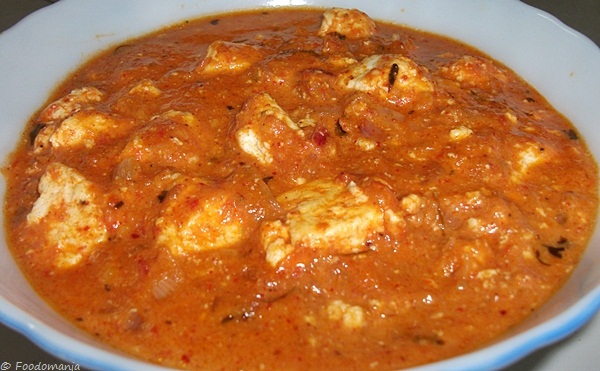
1) My Paneer Butter Masala was a big hit! And the rice bran oil, with its high smoking point facilitated beautiful caramelizing of the Onions!
2) My Spaghetti with Roasted Cherry Tomato Marinara didn’t even miss the Olive Oil!
3) The oil also adhered well to my Double Chocolate Brownies and presented me with a super moist baked goodie!
4) Stir fried Potatoes was once again, super delicious! It took me less oil than usual to get the texture that I love. And the dish wasn’t too oily either!
5) Just for fun, I decided to skip baking and make a Steamed Chocolate Cake instead. Guess what? It turned out bloody brilliant too!
So I guess what I’m trying to say is – go check out the Oil and get it for your own good! ;-)
‘I am reviewing rice bran oil as a part of the BlogAdda’s Product Review Program for Indian Bloggers

Fortune Rice Bran Oil Review

Fortune Rice bran oil comes with a number of specific health benefits:
  • Heart-friendly – lowers cholesterol by reducing blood triglycerides (fat molecules) in the blood.
  • The high Oryzanol content improves HDL/LDL ratio resulting in a healthier heart
  • Balanced PUFA/MUFA ratio means cleaner blood vessels
  • Balanced fatty acids, so balanced nutrition and balanced health
  • Tocotrienols and phytosterols in Fortune Rice Bran Oil help prevent cancer
  • The Squalene acts as a moisturizer and improves skin tone and delays wrinkle formation while slowing down aging
  • Vitamin-E helps keep the nervous system healthy
  • Maximum amount of natural antioxidants compared to other cooking oils to protect against diseases – healthy immune system
  • Ferulic Acid stimulates hormonal secretion and rejuvenates health
  • Low oil absorption means healthier food
I used Fortune Rice Bran Oil  for the following:
  • Cooking, frying, stir-frying, salad oil, baking, seasoning
  • Lighting the lamp
  • Massaging my skin
  • For my hair (yes!)
Rice bran oil is my go-to oil for all my oil-related uses. What I’ve found:
  • The oil is practically tasteless, and I’ve found it a perfect substitute for ghee (clarified butter) while using it to make sweets and cakes
  • The oil is lighter than the other oils we use – sesame oil and sunflower oil. So I use less oil while cooking. While deep-frying the food absorbs less oil
  • While frying, thanks to its high smoke point, it does not scorch what I am frying and best of all, barely leaves any residue. I can use the left over oil in cooking
  • The shelf life is longer. The oil does not acquire an “old” smell
  • Those who are allergic to nuts, dairy and other common food stuff can use rice bran oil as it has zero allergens – only rice bran
  • I enjoy using this oil
As a user of rice bran oil since 2004, I recommend Fortune Rice Bran Oil highly. But as my grandmother always advised, I also use small quantities of sesame oil, coconut oil and sunflower oil. Variety is the spice of life.
So now let me show you photos of some of the dishes I cooked over the past one week, using Fortune Rice Bran Oil.
I make Idlis thrice a week – it is healthy, steamed food. So where does the oil come in, you ask? See the photo on the right. I make the chutney powder, especially for this, mix with oil and pat the idli to coat it.  We love it like this. Makes a great packed lunch or snack at home.
Fortune Rice Bran Oil Review
On the left are plain idlis. On the right are idlis coated with chutney powder
The next regular in my house is rotis and parathas. I make plain parathas with a veg side dish…
Fortune rice bran oil review
Plain parathas with onion-cabbage stir fry and apples
This is ivy gourd – we call it kundru – most mornings I make a packed lunch of veg, roti and apple for dessert
Fortune rice bran oil review
Lunch – Plain parathas, ivy gourd curry and apple
Sometimes I make stuffed parathas – I grate radish, onion, carrots and knead this into the multi-grain flour and roll them out – see the pic below. On the left are the rolled out dough balls ready to be cooked on the griddle; what you see on the right of the apple is the cooked parathas.
Fortune rice bran oil review
Paratha stuffed with radish and onion and apple for dessert
On holidays we usually have vegetable pulao with a salad, papad (crisps), yogurt and pickle.
Fortune rice bran oil review
Top left is the cooked rice. On the right are the ingredients, ready to be pressure-cooked. The pic below the cooker is lunch – veg pulao, tomato salad and papad
On week days, I sometimes make plain rice, sambar or a veg gravy without lentils called vatha kuzhambu and a dry veg fry. Here is the eggplant gravy and raw banana fry I made, as an accompaniment to plain rice, dal (lentils), yogurt, crisps and pickle.
Fortune rice bran oil review
On top, eggplant cut and soaked in water, turmeric and salt. On the right, raw banana diced and soaked in water, a spoon of oil, turmeric and salt. Under it is the prepared “vatha kuzhambu” on the left and raw banana dry fry on the right.
Then yesterday, being Saturday, we decided to have puris.
I hadn’t made them in a while, because of the ‘flu going around at home.  It is something all of us love. I made apple gourd (Indian baby pumpkin) with onions as a side dish along with a mixed sprouts salad.
Fortune rice bran oil review
Deep fried puris on top and tinda subzi and salad below
For dinner, we had Tamarind rice – this is a big favorite in most homes.  Our house is no exception. I am in love with it. It is fragrant, tasty and easy to make. I usually make the tamarind mix from scratch and store it – so that we can quickly cook plain rice and mix and voila! It is ready to eat.
Fortune rice bran oil review
Tamarind rice
I apologize for not clicking photos of the bhajjis I made. We had visitors and were having too much fun, laughing and talking and finishing off the bhajjisas they were fried and placed on the plate. I swear I meant to click photos – I only remembered after the last one was eaten – I made over 30. To see how it is made, see  Naga’s blog one of my favorite food blogs.
I am also sorry I didn’t click photos of the cake I made with this oil. It tasted very good. I have witnesses.
And remember:
“Those who have no time for healthy eating will sooner or later have to find time for illness.”– Edward Stanley
Q
   Is Rice Bran Oil Healthy?
What do you think about rice bran oil? It was recommended to me by a nutritionist for its health benefits and its high smoke temperature, but I never see it mentioned except on the Web sites that sell it.
A
Answer (Published 9/30/2008)

Rice bran oil is extracted from the germ and inner husk of rice. It has a mild taste and is popular in Asian cuisine because of its suitability for high-temperature cooking methods such as deep-frying and stir-frying. It is said to be the secret of good tempura.
Related Weil Products
Dr. Weil's Vitamin Advisor for Your Whole Body - Foods, herbs and drugs can all interact, sometimes in unexpected ways. Dr. Weil's Vitamin Advisor takes known interactions into account when developing nutritional supplement recommendations, to help safeguard against adverse effects. Learn more, and get your free, personalized Dr. Weil's Vitamin Advisor recommendation today.
Rice bran oil is mostly monounsaturated - a tablespoon contains 7 grams of monounsaturated fat, three of saturated fat and five of polyunsaturated fat. In comparison, a tablespoon of extra virgin olive oil contains 11 grams of monounsaturated fat, two grams of saturated fat and one gram of polyunsaturated fat. Rice bran oil also contains components of vitamin E that may benefit health.
A study from the University of Rochester in New York showed that isolated vitamin fractions in rice bran oil may be useful for cholesterol control, although most of the evidence for this comes from studies in lab animals. In one of these studies, total cholesterol dropped by 42 percent in lab rats fed a concentrated fraction of vitamin E called tocotrienol rich fraction (TRF) extracted from rice bran oil. The animals' LDL ("bad") cholesterol levels dropped as much as 62 percent after their diets were supplemented with TRF. The study was published in the May, 2005, issue of Food and Chemical Toxicology.
Earlier studies by the same research team showed that TRF boosts the activity of liver enzymes that clear toxic substances from the liver and reduces or stabilizes liver tumors. The group concluded that long-term use of tocotrienol might reduce overall cancer risk.
This research might support supplementing with tocotrienols, but I haven't seen much research on rice bran oil's contribution to human health. For household use, it doesn't measure up to olive oil in terms of monounsaturated fat. Its higher smoke point would make it more suitable for high temperature cooking, which I recommend you keep to a minimum in any case.
Andrew Weil, M.D.

Rice bran oil

From Wikipedia, the free encyclopedia
Rice Bran Oil

Fat composition
Saturated fats25%
Myristic: 0.6%
Palmitic: 21.5%
Stearic: 2.9%
Unsaturated fats75%
    Monounsaturated fats38%
        Oleic acid38%
    Polyunsaturated fats37%
        Omega-3 fatty acidsα-Linolenic: 2.2%
        Omega-6 fatty acidsLinoleic: 34.4%

Properties
Food energy per 100 g3,700 kJ (880 kcal)
Smoke point213 °C (415 °F)
Iodine value99-108
Acid value1.2
Saponification value180-190
Unsaponifiable3-5
Rice bran oil (also known as rice bran extract) is the oil extracted from the germ and inner husk of rice. It is notable for its highsmoke point of 213 °C (415 °F) and its mild flavor, making it suitable for high-temperature cooking methods such as stir frying anddeep frying. It is popular as a cooking oil in several Asian countries, including Japan and China.[1]
A bottle of rice bran oil, flanked by smaller bottles of sesame oil andhemp seed oil.

[edit]Rice bran wax, obtained from rice bran oil, is used as a substitute for carnauba wax in cosmetics, confectionery, shoe creams and polishing compounds. it is an edible oil which is used in the preparation of vegetable gheeUses

[edit]Composition

Rice bran oil has a composition similar to that of peanut oil, with 38% monounsaturated, 37% polyunsaturated, and 25% saturatedfatty acids. The fatty acid composition is:[1]
Fatty acidPercentage
C14:0 Myristic acid0.6%
C16:0 Palmitic acid21.5%
C18:0 Stearic acid2.9%
C18:1 Oleic acid38.4%
C18:2 Linoleic acid34.4%
C18:3 α-Linolenic acid2.2%

[edit]Health benefits

A medically significant component of rice bran oil is the antioxidant γ-oryzanol, at around 2% of crude oil content. Thought to be a single compound when initially isolated, it is now known to be a mixture of steryl and other triterpenyl esters of ferulic acids.[1] Also significant is the relatively high fractions of tocopherols and tocotrienols, taken together as vitamin E. Rice bran oil is also rich in other phytosterolswhich may provide health benefits.

[edit]Cholesterol

Literature review shows rice bran oil and its active constituents improve blood cholesterol by reducing total plasma cholesterol and triglycerides, and increasing the proportion of HDL cholesterol.[2] Results of an animal study[3] indicated a 42% decrease in total cholesterol with a 62% drop in LDL cholesterol, when researchers supplemented test subjects' diets with fractionated vitamin E obtained from rice bran oil.

[edit]Menopause

The rice bran oil component γ-oryzanol was shown in Japan to be effective in relieving hot flashes and other symptoms of menopause. Researchers found 90% of the women found some form of relief from hot flashes after taking a rice bran oil supplement for four to six weeks.[4]

[edit]Antioxidant stability

Studies have shown the antioxidant stability in rice bran oil remains almost constant even when heated at frying temperatures. The study of thermal degradation and antioxidant stability in the oil is carried out by heating the oil to the frying temperature up to 250°C for 0.5, 1, 1.5, 2hrs. The density of rice bran oil is found to be constant throughout the time of heating indicates no molecular changes occurred due to antioxidant activity in the oil. The oxidative stability of rice bran oil was equivalent to or better than soybean, corn, canola, cottonseed, and safflower oil in a model system that simulated deep frying conditions.[5])

[edit]Other benefits

Other potential properties of rice bran oil include modulation of pituitary secretion, inhibition of gastric acid secretion, antioxidant action, inhibition of platelet aggregation,[2] lowering of blood pressure and regulation of cholesterol